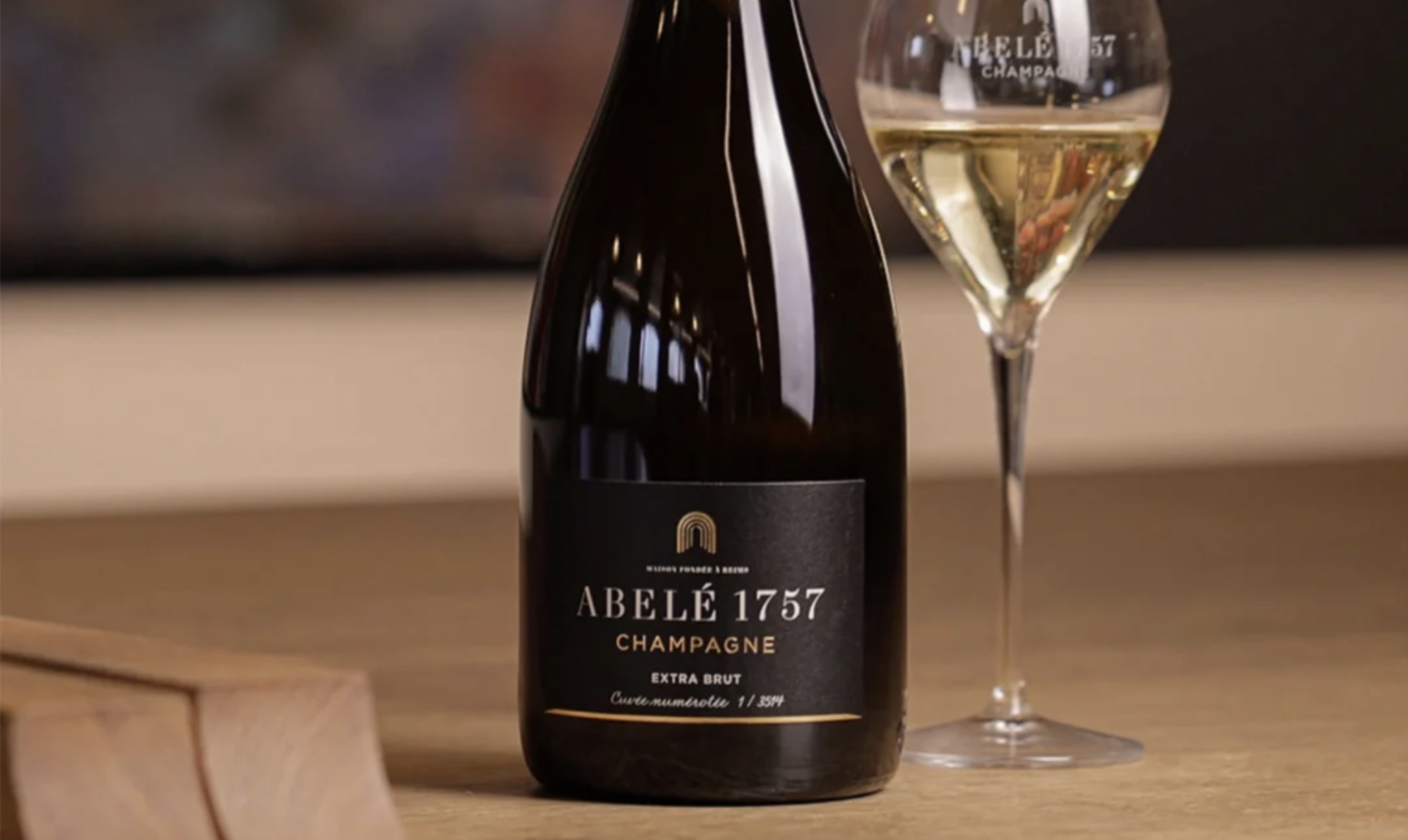
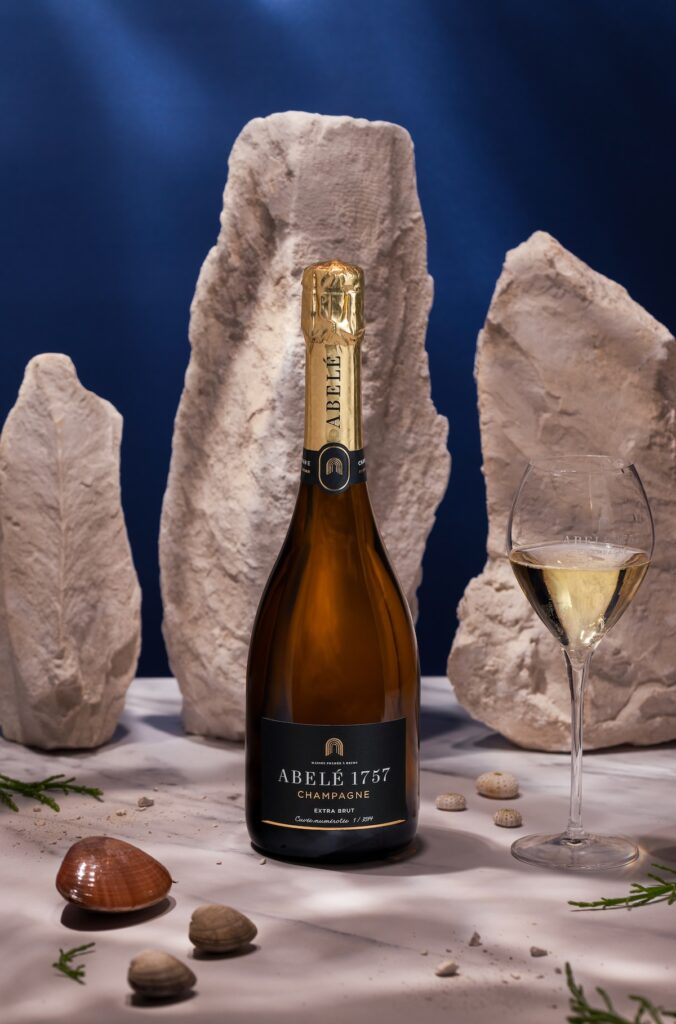
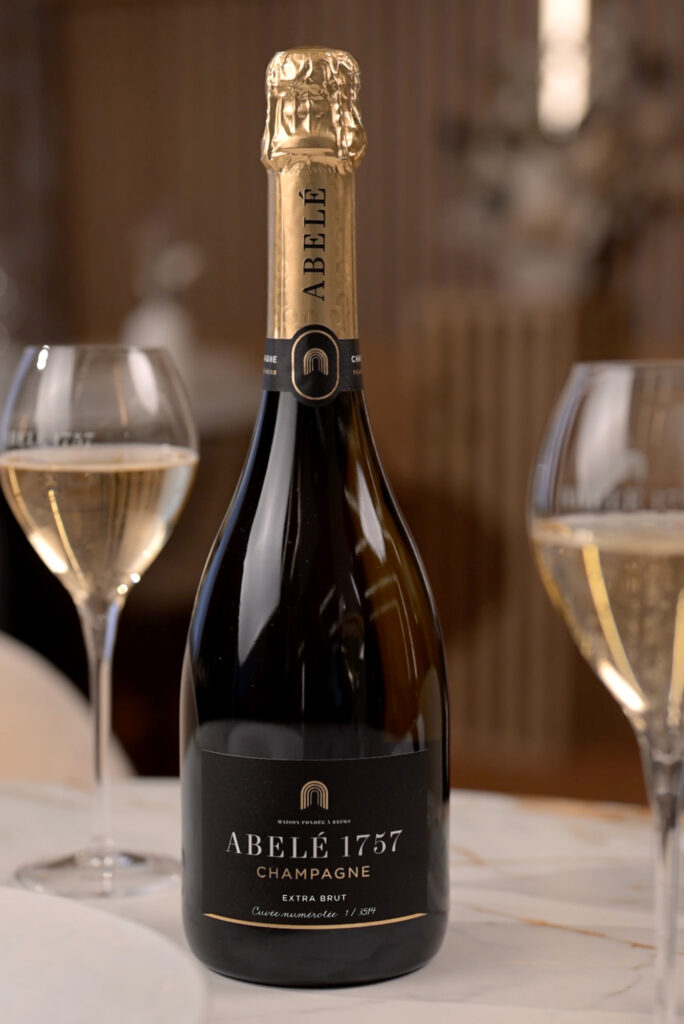
With its new Extra Brut, Abelé 1757 explores another expression of its signature cuvée. Four years in the chalk cellars, a manual technique and reduced dosage shape this champagne where freshness and texture answer each other.
In Reims, time is one of cellar master Étienne Eteneau’s tools. With the Extra Brut, the House of Abelé 1757 offers a new take on its Brut: a low-dosage champagne whose balance is built as much in the blending as in the patience of ageing.
The cuvée brings together 40% Chardonnay, 35% Pinot Noir and 25% Meunier, with a majority of wines from the 2019 harvest. This sunny year brings richness to a blend that retains the freshness sought by the House. The wine then spends four years in the century-old chalk cellars, sheltered from light and temperature variations.
To accompany this evolution, Étienne Eteneau adjusted a liqueur made from historic wines from a perpetual reserve. Above all, he stresses the desire to preserve the spirit of the Brut in a lower-dosage expression.
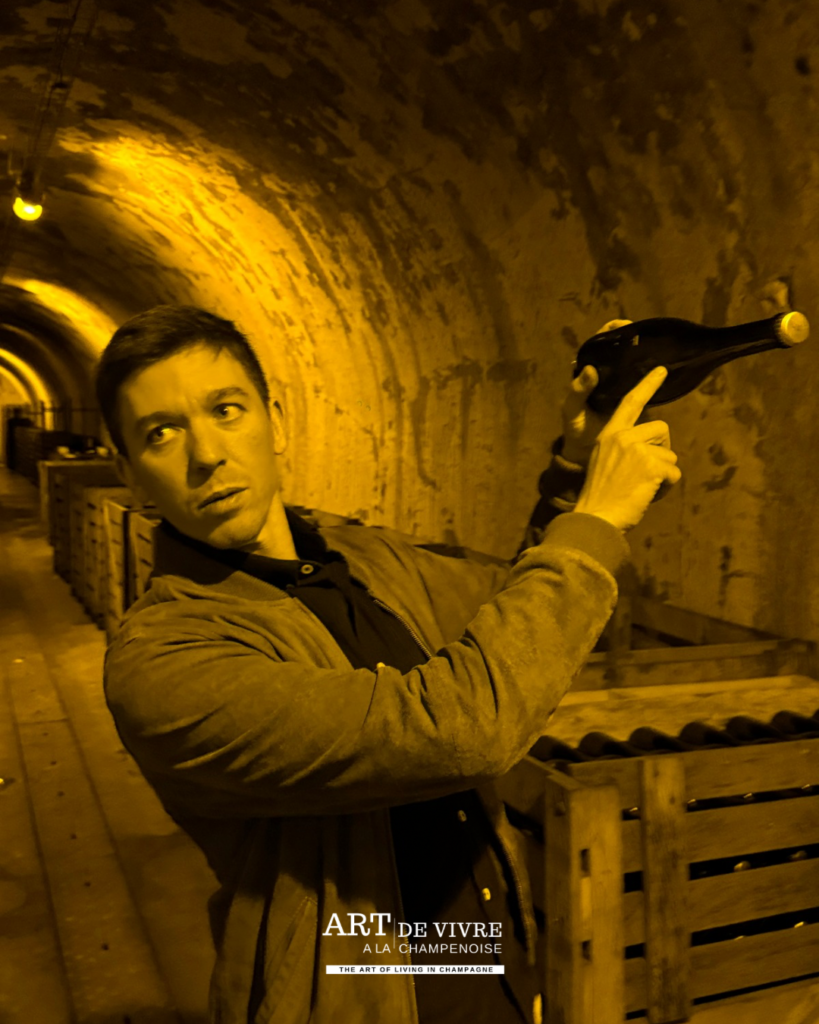
The poignetage technique
Behind this cuvée there is also discreet work done by hand. Poignetage involves giving the bottle a movement to put the lees back into suspension. This technique encourages exchanges between the wine and the yeasts as it ages.
At Abelé 1757, this practice contributes to the champagne’s aromatic richness and texture. Here it accompanies the lower dosage while preserving fine effervescence and a creamy sensation, two hallmarks of the House style.
This research is part of the exploratory cuvées developed by Étienne Eteneau, offered in limited quantities and numbered editions. A way of evolving Abelé 1757’s expressions while keeping the thread of its history, which began in 1757.
Citrus and depth
According to the House’s tasting notes, the nose opens on lemon, pink grapefruit and zest, then reveals white flowers, hints of nutmeg and rusk.
The palate combines a saline attack with a fuller texture. Apricot and redcurrant meet hints of camomile, verbena and bergamot. The finish extends this meeting of freshness and indulgence, with suggestions of toasted brioche and lemon meringue pie.
At the table, the House suggests seafood to accompany the iodine character of this Extra Brut. An idea for discovering this new variation on the Abelé 1757 style, where the low dosage gives full rein to the work of time.
Abelé 1757 Extra Brut: announced price €53, from wine merchants and at abele1757.fr.
What is the blend of the Abelé 1757 Extra Brut?
The Abelé 1757 Extra Brut combines 40% Chardonnay, 35% Pinot Noir and 25% Meunier. Wines from the 2019 harvest make up the majority of the blend.
How long does this cuvée age in the cellar?
It is aged for four years in the House’s century-old chalk cellars in Reims.
What is the poignetage used on this cuvée?
Poignetage is a manual technique that puts the lees back into suspension in the bottle. It encourages exchanges between the wine and the yeasts during ageing.
What dishes go with the Abelé 1757 Extra Brut?
The House recommends seafood to match its saline, iodine character.