
In Ambonnay, Champagne is growing biodiversity
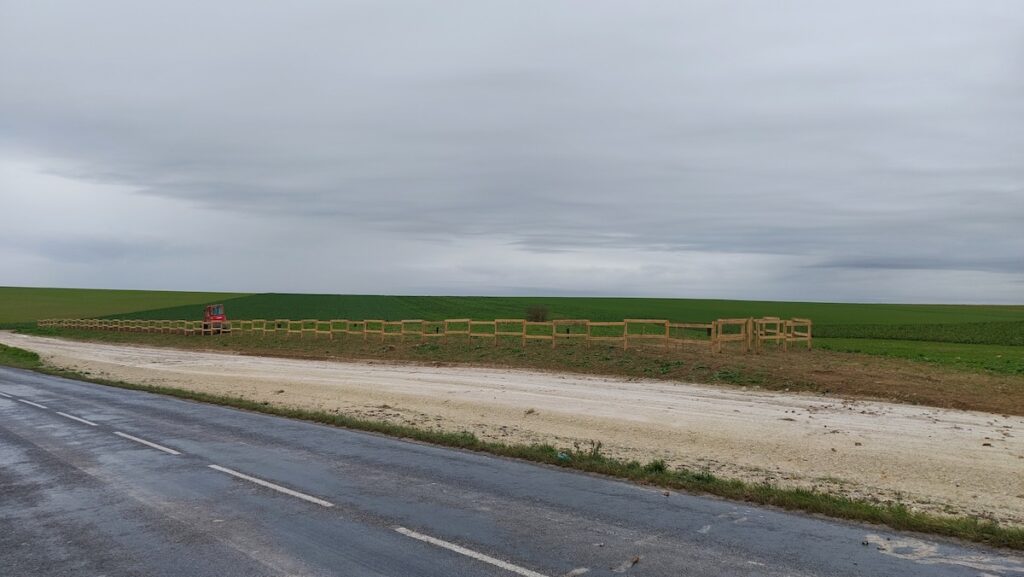
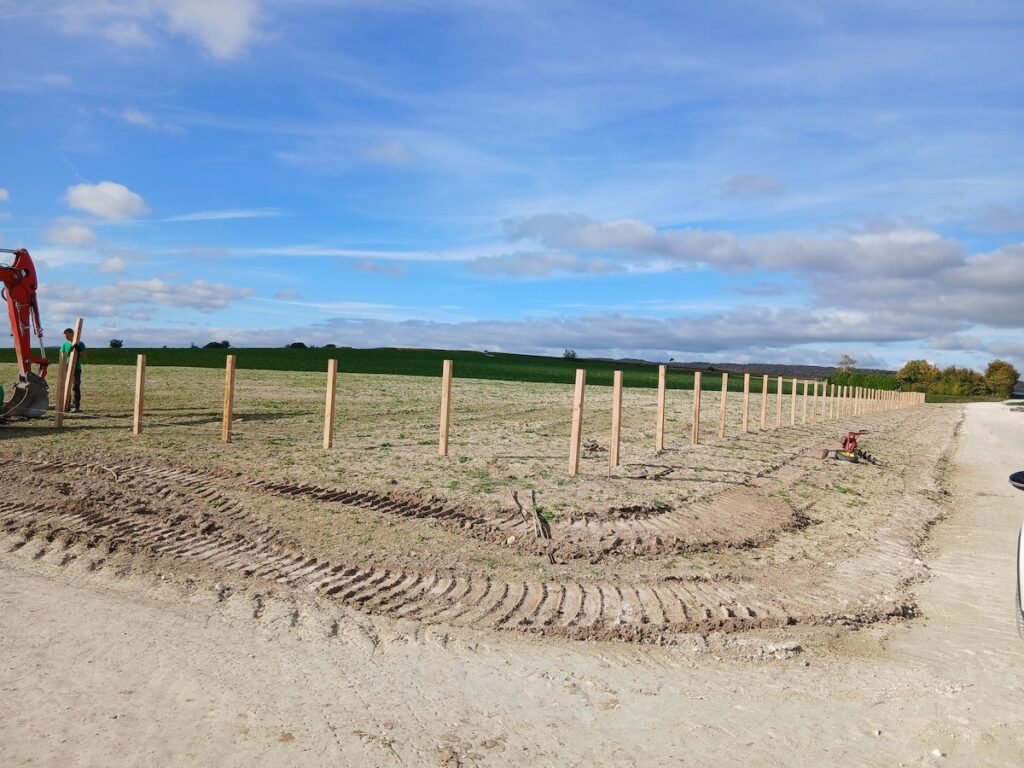
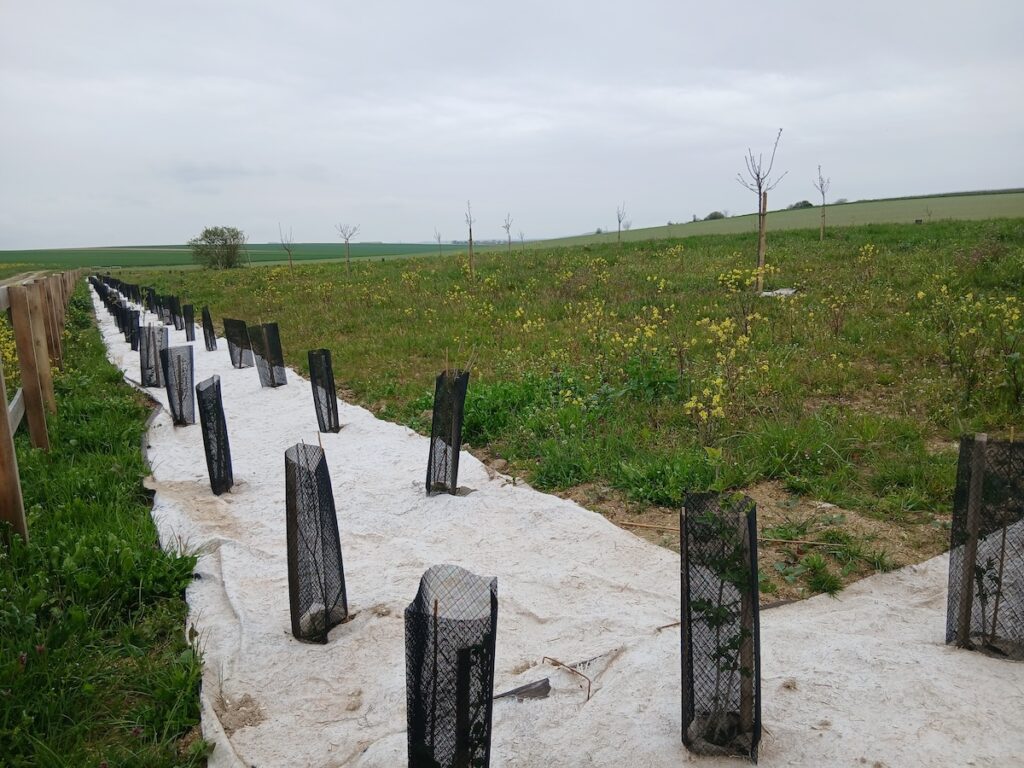
In Ambonnay, in the heart of the Montagne de Reims, a former degraded site is being given a new destiny. Where chalk materials once piled up, Champagne is now creating a space designed for the living world. A flower meadow, hedges, trees and paths now reshape this vineyard landscape with a clear ambition: to recreate lasting ecological corridors within the Champagne region.
This “Biodiversity Plot”, inaugurated on 20 May 2026 for World Biodiversity Day, illustrates the determination of several Champagne players to turn environmental commitments into concrete achievements. The project is jointly led by the Champagne Hillsides, Houses and Cellars Mission, the Comité Champagne and the House of Perrier-Jouët.
On this 1.4-hectare plot at the southern entrance to Ambonnay, the work was designed with ecological restoration and environmental restraint in mind. Materials found on site were reused to limit transport and reduce the carbon footprint of the works. A fence made of oak from the Montagne de Reims also structures this new natural area.
A living mosaic
Beyond the landscape aspect, the site was designed as a true “mosaic of habitats”. All the plant species used are local and labelled “végétal local”, to encourage natural adaptation to the Champagne region. This approach strengthens ecological continuity between the Montagne de Reims and the Marne Valley.
The project also relies on significant collective mobilisation. The Association Foncière d’Ambonnay, the Montagne de Reims Regional Natural Park, the Comité Champagne, the Grand Est Region, the Pays d’Épernay, the House of Krug and Perrier-Jouët all took part in this partnership.
For David Chatillon, president of the Union des Maisons de Champagne and co-president of the Comité Champagne, this initiative reflects “the Champagne sector’s ability to come together around shared objectives”. Maxime Toubart points out that the project is part of the Biodiversity plan launched by the interprofession since the 2000s to develop ecological reservoirs and corridors across the Champagne vineyards.
A call for projects relaunched
This achievement is part of a broader approach launched in 2023 around a biodiversity call for projects led by the Champagne Hillsides, Houses and Cellars Mission, the Comité Champagne and the House of Perrier-Jouët. The aim: to support ecological developments and awareness-raising in the face of climate challenges and ecosystem preservation.
Since its launch, nearly twenty projects have already been supported in Champagne: hedge planting, wetland restoration, combating invasive species and educational initiatives. Building on this enthusiasm, the scheme has now been renewed for 2026-2027. Applications will remain open until the end of October 2026.
Beyond the symbol, this Ambonnay plot is a reminder that preserving Champagne landscapes also depends on visible action on the ground. In a region inscribed on the UNESCO World Heritage List since 2015, biodiversity is gradually becoming a structuring element of tomorrow’s vineyard landscape.
A movement that goes beyond the vineyards
The Ambonnay project is part of a broader vision led by the House of Perrier-Jouët and the Champagne Hillsides, Houses and Cellars Mission around the “Local actions for biodiversity” call for projects. Renewed for the fourth year running, this scheme provides financial support for initiatives across the entire Champagne AOC.
The stated goal is clear: to recreate a true mosaic of habitats favourable to wildlife, including vineyards as well as farmland, forests, built-up areas and wetlands.
In practice, supported projects can take many forms: planting hedges or orchards in the vines, flower strips along paths, restoring ponds, creating forest edges, landscaping around farm sheds or preserving ecologically important wetlands.
Since its launch, nearly twenty projects have already been carried out across Champagne, notably in Ambonnay, Mutigny, Vertus, Chouilly, Fontaine-sur-Aÿ and Mareuil-sur-Aÿ. The map presented in the press kit illustrates this desire to gradually cover the Champagne region with local initiatives promoting ecological corridors and biodiversity.
A call open to local players
The call for projects is open to businesses, associations, municipalities and private individuals alike. Applications are assessed against several criteria: environmental impact, local involvement, durability of the developments and long-term maintenance.
Applications for the 2026 edition must be submitted by 31 October. A way for project leaders to take a concrete part in the evolution of Champagne landscapes at a time when biodiversity, climate adaptation and the preservation of terroirs are becoming major issues for the sector.
More information
See the website of the Champagne Hillsides, Houses and Cellars UNESCO World Heritage Mission